


Designing with Intention: How a Southwest Landscape Expert Uses Artistic Composition
- Aldo

- Apr 15, 2025
- 2 min read
Updated: Apr 16, 2025

From vanishing-edge pools that reflect the desert sky to courtyards that harmonize steel, stone, and succulents, award-winning designer Kirk Bianchi creates outdoor spaces rooted in visual storytelling. To bring clarity and rhythm to his landscapes, Kirk relies on the Wise Camera and Wise Photos apps. These tools have become integral to both his design process and teaching philosophy.
Whether sketching concepts for bespoke estates or leading his “Master Designer Methods” course for Genesis, Kirk turns to artistic composition principles to elevate every project. We spoke with him to explore how these creative frameworks influence his approach to landscape architecture and waterscape design.
What first led you to the Wise Camera and Wise Photos apps?
I was exploring classical design principles that could give my landscape layouts more intention. That’s when I encountered composition systems like Dynamic Symmetry and the Harmonic Armature—concepts with deep roots in fine art. It struck me that these same frameworks could bring cohesion and flow to large-scale outdoor environments.
While searching for practical ways to apply these principles, I came across the Wise Camera and Wise Photos apps. These tools instantly shifted the way I conceptualize spatial relationships in my designs.
How does composition guide your storytelling through design?
In luxury outdoor living, we’re doing more than placing pools, plants, and hardscapes. We’re building experiences. Composition allows me to frame each view from the home as a living artwork. Every line, curve, and focal point is there for a reason—to guide the eye, create rhythm, and invite exploration.
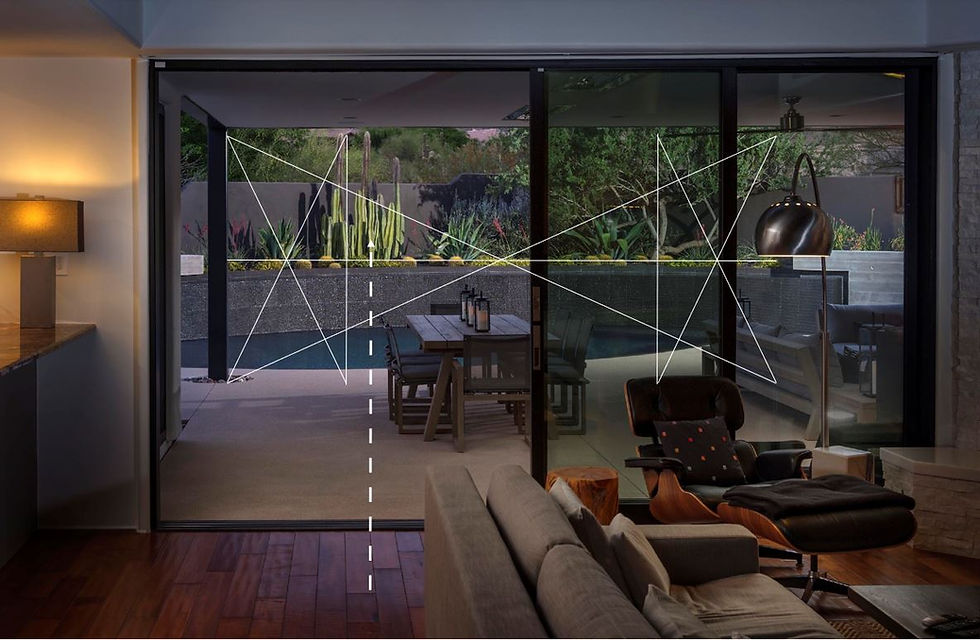
My thinking has been influenced by Japanese architecture and its seamless transitions between indoor and outdoor space. By aligning features using Dynamic Symmetry, I can place waterfalls, walls, and sculptural elements precisely at points that feel both structured and natural. Supporting elements—like trees, boulders, and reflections—follow hidden diagonals that draw everything together in visual harmony.
How do you balance structured composition with the organic nature of landscapes?
The magic happens in the tension between order and spontaneity. These compositional systems offer a backbone to the design, much like a blueprint. But within that framework, I allow the landscape’s textures, light, and native elements to breathe.
For example, the Harmonic Armature’s diamond grid helps me establish where major water features or spa elements belong. This core structure gives the design clarity. Then I introduce warm materials—desert plants, polished stone, reflective glass—that soften the geometry. Even in bold modern designs where concrete hovers over a cascade or glass panels intersect with giant saguaros, composition never fights the landscape—it enhances it.
How do the apps support your creative workflow?
One of the biggest advantages of the Wise Camera app is its ability to overlay composition guides live through my phone’s camera. I can walk a site and instantly see how elements fall into place across multiple perspectives. Later, I open those photos in Wise Photos to review and refine ideas more deeply.
It’s a fast, efficient workflow that allows me to be more confident in my decisions and communicate clearly with clients. What once took hours of sketching and guesswork now happens in the field, with a few taps of my iPhone.
Visit Bianchi Design at http://www.bianchidesign.com


